


 Account
 Wishlist


So you’re curious about sake and want to start your new adventure off on the right foot. With so many types of sake to choose from — junmai, ginjo, daiginjo, honjozo and dozens more — it can be difficult to know where to begin. Luckily, we at Palate Project are happy to share our knowledge and recommendations with you! Here are some tips on how to find the best sake to kick off your exciting journey with Japan’s national beverage.
Which sake type is best for beginners?
There is no single best sake for beginners. There are myriad sake styles and everyone has their own taste preferences. The best place to start is The Sake Flight, which provides you with an expertly guided sake tasting experience at home. The reason it’s perfect for sake beginners is that it provides you with three mini-bottles from different categories, allowing you to pick your own path based on what you like from the set.

Another recommended starting point is to begin with some of our bestselling bottles. These are the brews that are most popular with our customers — there has to be something good about them, right? For example, Hakutsuru “Sayuri,” a beloved nigori with tasting notes of strawberries and cream, is lightly sweet with a milky texture and a dry finish. Dassai “45,” on the other hand, is a soft, clean junmai daiginjo that delights with florals and sweet melon. There are delicious, easy-to-drink sake in almost every category, so there is no right answer. If you’re still getting used to the terminology, think about which flavors you like most.
Fruity and elegant

When discussing clean and fruity sake, daiginjo, junmai daiginjo, ginjo and junmai ginjo are usually the topic of conversation. These sake types are generally considered to be the most premium because brewers use highly polished rice to achieve lighter, more refined flavors.
Wakatake “Onikoroshi” Junmai Daiginjo
One of our leading fruity and elegant bottles, Wakatake “Onikoroshi” Junmai Daiginjo is a frequent first buy. Sweet flavors of peach and melon sing through a velvety texture and crisp finish. Enjoy it chilled for a more refreshing sip, or warm to enhance the aroma and sweetness.
Umami

Earthy, robust, savory flavors are most often found in junmai sake. While those who enjoy delicate white wines may want to start with ginjo or daiginjo, people who love drinks with rich-tasting profiles should start here.
Asabiraki “Suijin”
The maker of this sake has won gold awards dozens of times, so there is good reason for Asabiraki “Suijin” to be on your list of sake to try. This smooth junmai offers warm spice and mineral notes that are especially comforting when warmed.
Balanced

A balanced sake is a good bet for beginners who want to ease their way in by following the Goldilocks principle: not too fruity, not too bold, but just right!
Hakkaisan “Tokubetsu Junmai”
Hakkaisan “Tokubetsu Junmai” is the person at the party who gets along with everyone. It’s exceptionally easy to drink thanks to its mild flavor and soft mouthfeel. Clean with just the right amount of umami, this customer favorite is excellent with food. It can also be served at virtually any temperature! At less than $30, it’s also a safe selection for your wallet.
Sweet and juicy
Those who adore sweet wines such as moscato or dessert riesling should reach for a sweet and juicy sake. These brews have full and expressive fruit flavors. To achieve this, brewers sometimes skip the usual charcoal fining or pasteurization processes to retain more of the sake’s raw flavor.
Born “Gold”
If all you’ve encountered until now has been warm, rice-forward sake, you will be gobsmacked by Born “Gold.” This top-rated “muroka” (unfined) junmai daiginjo by Katoukichibee Shouten gives big, juicy flavors of peach and apple. It’s sweet and full but doesn’t tip the scales. Don’t delay opening this bottle of liquid gold.
Smooth and dry

Don’t have a sweet tooth? No problem. Smooth and dry sake are all about a crisp, palate-cleansing finish. Whether you’re looking for a gentle dryness or something with a sharper edge, it’s all available at Palate Project. While flavors can run the gamut from citrus to rice, each sip will leave you longing for the next.
Suigei “Tokubetsu Junmai”
The name of the brewery that makes Suigei “Tokubetsu Junmai” translates to Drunken Whale, which recalls a Kochi prefecture warlord from the Edo period (1603-1868) who was a total glutton! This special junmai is a fantastic, reliable sake that complements all types of dishes. It’s light and dry but not lacking in flavor or body. There’s no going wrong with this bestseller.
Flavored

Cocktail lovers will have tons of fun exploring our flavored sake collection, which includes “umeshu” (plum sake), yuzu sake, strawberry sake and more. These fruit-infused bottles can be enjoyed straight, or as an ingredient in a creative mixed drink. In fact, we have sake cocktail sets to help you mix it up at home!
Choya “Plum Wine” With Fruit
You can call it “umeshu,” plum wine or plum sake — whatever you call it, it’s the most popular type of flavored sake, and Choya is the best-known brand. Their plum wine is sweet and a little tart with a light, silky body. The world’s leading umeshu producer makes several types, including regular and sparkling. Find Choya “Plum Wine” WIth Fruit in 500-milliliter, 750-milliliter and mini-cup sizes! There are whole ume fruit in each bottle.
Nigori (Cloudy)

Often mistranslated as unfiltered sake, nigori is coarsely filtered sake that leaves some rice lees in the final brew. With its creamy mouthfeel, nigori sake tends to lean toward the sweeter side of the spectrum, although there are some dry types. The level of thickness and whiteness is entirely up to the brewery, and can range from just a little hazy to chalk-white.
Kikumasamune “Kinushiro” Nigori
“Kinushiro” is a wonderfully balanced representation of this sake style. It’s packed with banana aroma and flavor along with a hint of melon, but refrains from being too sweet. Even people who don’t usually consider themselves nigori drinkers can get on board with this one. It’s such a hit with American sake drinkers, that it’s now a U.S.-only export!
Sparkling

Many people are unaware that sparkling sake even exists, but if bubbly is your jam, then start here! Sparkling sake offers a world of fruit flavors that will surprise longtime Champagne drinkers.
Shirakabegura “Mio”
Why not pop off with the world’s bestselling sparkling sake? Luscious flavors of grape and pear give “Mio” an almost thirst-quenching quality that will have you on cloud nine. At just 5% ABV, don’t worry if you finish the whole bottle with a friend — it’s hard not to!
Koshu

Are you the type of person who loves whiskey or aged spirits? “Koshu” (aged sake) is for you. Aging alcohol has the effect of strengthening, deepening and enriching its flavors, and that holds true for sake too. Aged sake can develop an amber color and often features flavors such as caramel, dried fruit and smoke.
Jozen “Aged”
Aged sake can be very rich and umami-forward, but if you’re a beginner, Jozen “Aged” is a good place to start. This brand is known for its exceptionally clean, smooth sake. This matured version brings out voluptuous notes of cherry and raisin while still maintaining its characteristic lightness.
What are the best sake brands for beginners?
Begin familiarizing yourself with various styles by exploring sake by brand. Each brewery takes its own approach based on things like personal philosophy and local ingredients, and experimenting with sake this way can help foster an understanding of regionality. Here are just a few of the best sake brands to start with, who make popular sake that many Palate Project customers love!
Hakkaisan Brewery Company

Hakkaisan is one of the more well-known names in sake. Based in Niigata prefecture, their product line exemplifies the local style of refined, clean and dry sake, called “tanrei karakuchi.” This is due in large part to the heavy snowfall that occurs there, which provides them with cold temperatures, clean air and high-quality soft water.
Hakkaisan has many options available, most of which are very affordable. Try a range of styles, from their smooth, aged “Yukimuro” to their fruity yet earthy “Honjozo.”
DASSAI Inc.
One of the most internationally renowned sake brands, Yamaguchi prefecture’s Dassai focuses solely on producing refined junmai daiginjo. Many people begin their sake journey with this brand’s fruity, floral and elegant offerings.
Do a Dassai sake tasting of your own at home with our Dassai Set, which includes three different bottles. Once you’re done, move on to their sister brand, Dassai Blue, which is based in New York.
Hakutsuru Brewing Company
Like Hakkaisan, Hakutsuru is a brand that offers an array of options, including junmai, junmai ginjo, nigori and more! Make your way through this popular sake brand for a delicious crash course in sake types. The brewery has been operating in Nadagogo since 1743, and they’re still going strong.
Sip on bottles like “Brewer’s Pride,” a rice-forward “futsushu” (table sake), and their delightfully sweet yet slightly sour “Plum Wine.”
Is it best to start with hot or cold sake?
One of the things that makes sake a uniquely versatile drink is that it can be enjoyed at a range of temperatures, from chilled to hot. So if you’re a first-timer, should you reach for hot or cold sake?
Ultimately, it’s a matter of preference. Making the transition from Western beverages that are served cold, like white wine, may be easiest with cold sake. However, drinkers who prefer full-bodied beverages might be better off warming up a robust junmai. The best way to learn about how sake temperature affects taste is to try one sake many ways. Atago no Matsu “Tokubetsu Honjozo” and Otokoyama “Tokubetsu Junmai” are two well-loved examples of sake that can be served at practically any temperature.
Cold sake

Serving sake cold — below 59 F — gives it a sharper, crisper taste. Lighter, more delicate sake is usually served cold. By the same token, chilling can also enhance any underlying bitterness. Read one of our other Sake Guide lessons about how to serve sake at different temperatures for a more in-depth understanding, and check out our 10 Best Cold Sake blog post for more recommendations!
Gangi “Mizunowa”
“Mizunowa” is a “namachozo,” meaning it has only gone through one round of pasteurization prior to bottling. (The standard sake undergoes two rounds.) That gives this junmai ginjo a fresh taste, which awakens its fruity flavors. This type of sake is especially vibrant and refreshing when chilled.
Room temperature sake
The benefit of drinking sake at this middle-of-the-road temperature range — between 68 F and 95 F — is that umami becomes more noticeable without sacrificing lighter flavors; in short, the sake is able to relax. This allows drinkers to get a sense of the dynamic quality of the sake.
Sohomare “Indigo”
“Indigo” offers a complex flavor profile that lets you experience the joy of discovery. There is a richness beneath this sake’s fruit flavors; a nuttiness that’s not characteristic of most junmai ginjo. Experiencing this sake at various temperatures reveals all of its different layers.
Warm sake
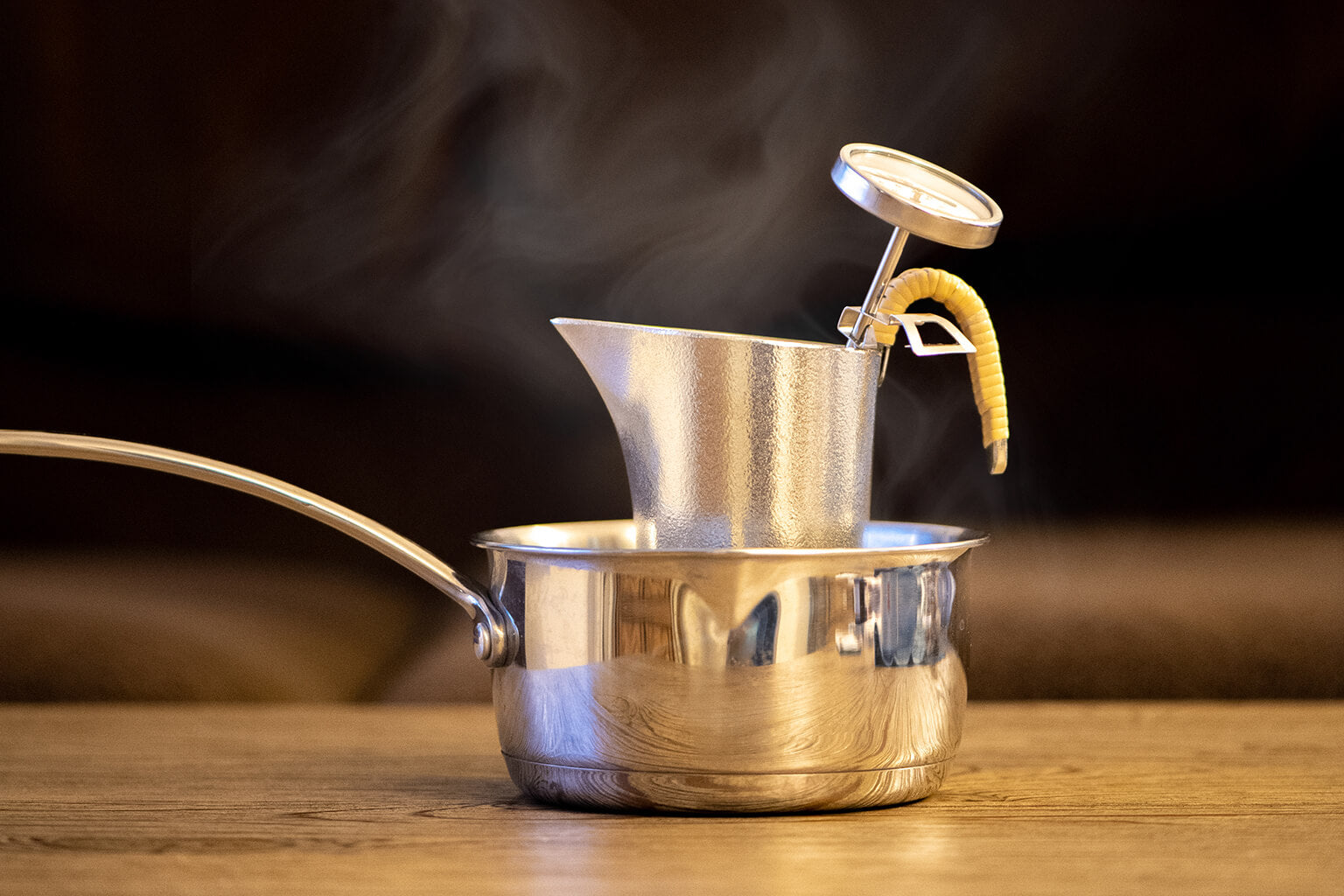
Even more umami and aroma can be coaxed from sake when served warm, at around 104 F. Warming can also mellow out some of the stronger flavors of more robust, dry sake. If a sake tastes too sharp when chilled or at room temperature, warming it up will ease that. However, overheating can damage the sake and result in a harsher alcohol taste.
Hakutsuru “Tanrei”
Hakutsuru “Tanrei” comes in a set of three single-serving cups, so you can enjoy them one at a time or with friends. This affordable junmai exudes aromas of honey and pear, with flavors of toasted grain and cashew on the palate. Classic, umami-forward sake like Hakutsuru “Tanrei” shine when heated. Feel free to heat it to above 104 F, but don’t exceed 131 F.
Note: While sake is generally not recommended to be heated via microwave — a stovetop hot water bath is usually preferable — the brewery says it is OK to remove the cap and microwave for 40 seconds to 1 minute.
What’s the occasion?

There is a sake for every occasion, from daily dinners to large celebrations. There are no hard-and-fast rules here, but here are our picks for some of life’s joyful moments. Our Sake Gift Guide is also an excellent resource.
Celebration
Celebration means bubbly! Set Champagne aside and pick up a bottle of sparkling sake. Whether your budget is $30 or $200, there are exciting bottles to help you toast and congratulate.
Hakkaisan “AWA” Clear Sparkling White Koji
As mentioned earlier, Shirakabegura “Mio” is an affordable crowd-pleaser at under $30. But if you’re looking for something a bit more refined, a bottle of Hakkaisan “AWA” Clear Sparkling White Koji is in order. This delightfully fruity sake pops with acidity and playful effervescence. Savor notes of lemon and apple as this refreshing junmai daiginjo dances on your palate.
Family gathering
When sitting down with family, you’ll want to bring out a bottle that can appeal to a variety of palates and pair well with whatever food is on the table. The best route is a balanced or smooth and dry sake that’s both impressive and affordable.
Kikumasamune “Taru”

At less than $25, Kikumasamune “Taru” is a total stud inside and out. The uniquely stout, curved shape is reminiscent of a traditional sake carafe, while its clear, rippled surface makes it even more mesmerizing. People fall in love with its taste too; Kikumasamune “Taru” is clean with forest-fresh cedar and subtle black pepper notes for depth. Light and dry with a touch of umami, it’s perfect for the dinner table.
Date night
One of the easiest ways to impress your date is with a classy junmai daiginjo. Brewed from the most highly polished rice, this category’s delicate, elegant flavors are sure to please. They’ll think you consulted a sommelier just for them!
Nanbu Bijin “Shinpaku”
Fifty percent of the rice grain is milled away to reveal graceful notes of melon and sweet rice. Its elegance lies in its clean simplicity. Kick off your evening by drinking “Shinpaku” on its own, then pair it with fresh seafood.
How much does a good sake cost?
There are several factors that affect sake price, such as the amount of rice used to make it and how much it is polished. At Palate Project, customers can find sake of all prices, from under $20 to over $1,000. Check out our blog for more info on sake price and budget sake recommendations!
Budget sake
Your favorite sake might be one that doesn’t break the bank! There are countless bottles that will satisfy your taste buds as well as your wallet. Most of the bottles mentioned in this article fit the bill, but we’ll give you one more for good measure.
Otokoyama “Tokubetsu Junmai”
This dry, full-bodied sake is a staple in many homes. Smooth and dry with hints of mineral and black cherry, Otokoyama “Tokubetsu Junmai” is a reliable friend at any temperature and with any cuisine. It’s under $30 and gives exceptional quality for the price.
High-end sake
Looking to make a statement? Many of the most refined sake are made with very highly polished rice, which requires more time and resources to accomplish, thus bumping up the cost.
Tatenokawa “18”
This luxurious junmai daiginjo has an 18% rice polishing ratio, which means that only 18% of the original rice grain remains. The result is an exquisite sake with fine fruit flavors and a touch of sweetness. Tatenokawa “18” has won several awards, including three medals at Milano Sake Challenge 2025. Take the Italian judges’ advice and serve it chilled in a wine glass with a plate of thinly sliced prosciutto.
Go find your favorite!
We’ve given you our recommendations and other tools you need to make informed choices about which sake to purchase. The rest is up to you, so have fun experimenting! And don’t forget — The Sake Flight is here to help you out.
Resources
“Sake Adviser Certificate Course.” Sake School of America, 2020.
Sullivan, Timothy. “Sake Temperature.” UrbanSake.com, 2017.
https://www.urbansake.com/sake-101/sake-temperature/
Author
Palate Project
Palate Project is the largest online sake seller in the U.S. We make it easier to access, understand and enjoy sake in everyday American life. It’s fresher sake with better guidance. Explore our Direct Imports collection for exclusive bottles handpicked by our experts in Japan.


