


 Account
 Wishlist


Although it has gradually become a more familiar drink worldwide over the past few decades, people still have a lot of questions about how to drink and serve sake. Does it have to be served hot? Do you need special equipment? How do sake sommeliers do proper sake tastings? What should you do to avoid committing a sake faux pas? Read on to find out.
How serving temperature affects sake’s taste
Sake is a unique fermented beverage with a broad range of flavor profiles and great depth of flavor. Many of its aromas and textures are both complex and delicate, and the overall impression a sake will give you may depend on any number of factors, including its temperature, your drinking vessel and the food that accompanies it.
This is why it helps to understand how to prepare sake. If your sake has been heated for too long or at too high of a temperature, it may have lost much of its crispness and more delicate aromatic compounds. If your sake is served too cold, your palate may not be able to appreciate its fruity or savory aromas, and you’ll miss out on all it has to offer unless you let it warm up a little.
Best serving temperature by sake type

Different types of sake tend to lend themselves to certain temperature ranges. You can find the ideal serving temperatures for each sake on Palate Project by looking at its product page. Many producers have specific recommendations for certain products, which may differ from the general guidelines you’ll find here.
It also helps to understand that many sake take on a delightfully different character depending on their serving temperature. It can be fun to experiment a little, trying a sake cold first, then at room temperature, and finally slightly heated. In this way you can discover your own preferences for each sake you try, and you might discover that the same sake will pair well with different foods depending on its temperature.
The following is a basic list of sake types and general temperature ranges. This may serve as a guide, but there are always exceptions.
Daiginjo and junmai daiginjo
Cold (40 F-60 F) to room temperature (70 F). These sake varieties usually feature a delicate mouthfeel and floral or fruity aromatics. If the sake is ice-cold you might miss out on some of the subtleties, but if it’s heated it may lose its delicate nature. So cold, but not frigid, is typically the best way to go.
Ginjo and junmai ginjo
Cold (40 F-60 F) to room temperature (70 F). This is similar to the daiginjo recommendations, however, some of them hold up well to light heating (85 F-115 F), especially junmai ginjo varieties. Check each bottle’s product page for recommendations.
Junmai
Cold (40 F-60 F) to room temperature (70 F) to warm (85 F-115 F). Because junmai sake generally have more full, robust taste profiles compared to ginjoshu, this category has a relatively broad range of serving temperatures, so it can be fun to experiment and taste the same sake at different temperatures. That said, you can almost never go wrong having it cold, either, as it’s almost always servable a few moments after taking it out of the fridge.
Honjozo
Cold (40 F-60 F), room temperature (70 F), warm (85 F-115 F) or hot (120 F and above). As with junmai, honjozo holds up really well at a broad range of temperatures. Some even really show their best side at either of the extremes. Try it both ways and get two experiences for the price of one sake.
Futsushu
Cold (40 F-60 F), room temperature (70 F), warm (85 F-115 F) or hot (120 F or more). As a category, “futsushu” (table sake) has a very broad variety of flavors and textures. Some are best cold, but most will also stand up to a lot of heat. This is another great opportunity to try the same sake at different temperatures to see how the flavor profile changes.
Nigori
Cold (40 F-60 F). This one is pretty straightforward: Nigori is simply at its best when it's cold. Some are great over ice (below 40 F) too. Its cloudy, creamy texture is at its best at these low temperatures.
Sparkling
Cold (40 F-60 F). Sparkling sake have carbonation and, generally, lower alcohol content than other sake, so they are tastiest when chilled and crisp.
How to heat sake
You might have had piping hot sake at a Japanese restaurant, but this isn’t really the proper way of drinking sake. Too much heat can actually impair its flavor. In this section, we’ll explain how to heat sake at home.
How to warm sake with a hot bath

To enjoy delicious hot/warm sake, use a hot bath. This is the best way to warm sake so you can control the temperature incrementally, which helps keep its delicate flavor. Additionally, it is recommended that you use a liquid thermometer; in Japan, there are some products specifically made for hot sake.
- Pour the sake into a Japanese “tokkuri” (carafe/decanter), like the lovely blue-and-white patterned “Shohogama” Somekarakusa Tokkuri.
- Submerge the tokkuri in a pot of water. Note: The level of sake liquid in the vessel and that of water in the pot should be the same height.
- Turn on the stove and heat up sake gradually, like you would when melting chocolate or butter.
An alternative way to heat sake would be to submerge the vessel in water that has already been boiled. Let it sit a few minutes until it reaches the desired temperature. If you choose this method, be careful not to put a very cold sake bottle into boiling water — this could cause the glass to break. Use a room-temperature tokkuri to be safe, and don’t submerge it until the boiled water has cooled slightly.
How to microwave sake

Heating sake in the microwave is not recommended because it’s difficult to control the exact temperature, resulting in uneven heating within the vessel, which could lead to a bitter, unpleasant, overpowering alcohol taste. However, if you have no choice but to microwave sake, be very careful to avoid burns and disrupt the sake’s essence and flavor. You can try the following steps below, with caution:
- Heat the sake halfway.
- Transfer the sake into another vessel.
- Heat it again until it reaches your desired temperature.
If your only choice is to use a microwave, don’t rush it. Be careful to avoid burns!
How to chill sake
To chill sake, put the sake in the refrigerator but avoid positioning it near strong smells or in a spot that is more prone to vibration — both of which can affect the sake’s condition. If you want to serve cold sake for dinner, put it in the fridge the night before.
Also, keep in mind that sparkling sake with in-bottle secondary fermentation should be served ice cold because yeast, one of the ingredients of sake, starts producing gas in the bottle at temperatures higher than around 40 F; there is a risk of the sake exploding with added pressure when the lid is opened! Additionally, do not leave a sparkling sake bottle in the freezer as this may also change the pressure dramatically. When opening sparkling, always open chilled, twisting the cap slowly.
If you want to chill sake quickly, follow these steps:

- Put ice and water in a big bowl.
- Add a teaspoon of salt in the bowl and stir. The salt lowers the freezing point of the ice water, helping it cool the bottle of sake more quickly. Place the sake bottle in a plastic bag to prevent the label from getting wet, then position it in the bowl and wait for 30 minutes.
How to pour sake
If you have a tokkuri at home, pour the sake first from the bottle into the tokkuri. If not — and particularly if you have a normal-sized bottle (720 milliliters) or a small bottle (300 milliliters) and are drinking it cold — it’s perfectly fine to pour directly from the bottle. If you have an “issho-bin” (1,800-milliliter bottle), it will make your life easier if you decant it to a tokkuri or other vessel you have at home.
The first thing to keep in mind — and this is typically how Japanese people hold and present various objects — is to hold vessels with both hands. When pouring sake for someone, hold the tokkuri with your right hand and touch the other side with your left hand.
Now, when someone else is pouring sake for you into your sake cup, like an “ochoko” or a stemless drinking glass, the proper way to receive it would be to hold the ochoko with your right hand while touching the bottom of the ochoko with your left hand. If you want to level up, use your right index finger as a cushion for the tokkuri to avoid clinking against your ochoko. And of course, after pouring, take at least one sip before putting your ochoko on the table.
If all this sounds confusing or too specific, the only thing to remember is that in Japanese culture, it always looks more polite and elegant to hold objects with both hands. It doesn’t matter as much which hand is in which position, so if you’re a lefty, hold the vessel in whatever way feels most natural to you.
How to drink and sip sake

When drinking sake, most people think of traditional Japanese vessels such as ochoko sake cups. These days, however, there is much more flexibility to drink with whatever suits your tastes. Many find that delicate sake can be more delicious in a wine glass! The type of vessel can actually influence how you sense its aroma and flavor sensations on your palate. Head to our blog for a complete overview of types of sake cups and glasses.
For sake that fall into the ginjo or daiginjo categories, we recommend drinking with a wine glass rather than Japanese traditional sake cups like ochoko. A wine glass helps to collect and release nuanced aromas over a larger surface area, whereas with a small ochoko, the fragrance is not as palpable.
The size of the rim of a vessel affects the perception of acidity. A glass with a wide rim will allow the acidity to come through more clearly, compared to a glass with a narrow rim where the acidity is minimized and umami comes in front. Because the rim is where the drinker makes contact with the sake, the thickness of the glass can influence the perception of sweetness and finish; a thick glass will give a sweeter, longer finish, whereas a thin glass will make for a drier, lighter finish. Understanding how vessels work — the effect of the bowl size on density; of height on flavor; and material on texture — isn’t necessary to enjoying sake, but it can show off its full flavor potential.
How to drink sake with masu

A “masu” is a traditional box-shaped measuring container for rice or liquid, and also functions as a vessel for drinking sake. They look like square cups and are usually made from Japanese cedar, which imparts a distinct woody flavor and aroma to the sake.
The proper way of sipping sake from a masu is not from its corner but from its side. To achieve this without spilling, sip slowly and don’t let your upper lip touch the masu. Drinking from one of the corners, however, is a method preferred by those who want the sake to come across as drier.
How to drink nigori sake
Nigori is a cloudy type of sake, which is made by passing the sake through a coarse filter so some of the lees (“kasu”) remain. Its flavors can range from sweet to dry, but its texture and cloudy appearance are what sets it apart from other sake styles. Hakutsuru “Sayuri” is one example of a very popular nigori, but all nigori sake can be served and enjoyed with the same simple steps.
We recommend gently mixing the lees by tilting the bottle before serving. However, if you want to get a taste of the clear sake floating at the top of the bottle, or “uwazumi,” carefully pour part of it out very slowly, without stopping to tilt the bottle back up. This will prevent the lees from the cloudy part from getting mixed in. After you’ve tried this portion, put the cap back on the bottle and gently tilt it back and forth to blend. Nigori sake is usually best enjoyed cold.
Note that if you are about to enjoy a sparkling nigori, tilting and mixing the bottle is not necessary or recommended, as the natural pressure will stir up the contents for you when opened.
How to do a sake tasting
Sake tasting sessions done by professional sake sommeliers, or “kikisake-shi,” have a very similar process to wine tastings. The basic premise is to first observe visually, then get a sense of the aromas, and finally taste the sake to appreciate the aromas more fully, as well as the texture and aftertaste.
The Sake Flight is an expertly guided home tasting experience

Palate Project makes enjoying a real sake tasting simple and fun by providing you with all the materials you need. The Sake Flight comes with three different sake mini-bottles, three ochoko cups, a tasting mat and informational cards. By tasting various sake types side by side, you can appreciate the differences and find your favorite style.
At sake competitions, professionals use large ochoko with a bullseye pattern at the bottom of the glass to check the clarity and color of the sake.
- Observe: Notice the visual aspects of the sake. Is it transparent or cloudy? Is it as clear as water, or does it have a tinge of yellow or amber? This information will tell you something about the degree of filtration, and the age or storage circumstances of the sake.
- Smell: Lift the glass and breathe in slowly at first to read the top notes of the sake. Take note of the aromas that stand out to you; they may be fruity, lactic, herbal or spicy.
- Taste: Take in a few milliliters (a tiny sip) of sake followed by a little air, as if gently sucking through a straw. Aerate the sake a bit at the front of your mouth to start noticing secondary aromas. Move the sake around your mouth so that it hits all sides of your tongue. Look for sweetness around the tip of your tongue, dryness and acidity along the sides, and bitterness and astringency toward the back of your tongue. Also notice whether the sake feels light or heavy, dynamic or still, in terms of its texture and movement.
- While professional kikisake-shi will stop at the third step and spit out the sake to avoid overtiring their palates, at a home tasting you can swallow your sake and enjoy observing its aftertaste. Does it seem to disappear quickly, or does it linger? Is the aftertaste similar to the main flavor and aroma, or does it change drastically?
All of these steps are by no means essential to enjoying sake at home, but conducting a sake tasting and asking yourself some of these questions about what you’re seeing, smelling and tasting can help you appreciate the sake a little more. You don’t have to have any special training to do this — simply observing and taking your own notes in your own way will help your palate become more sensitive and alert.
Food to serve with sake
What kind of food should you have with sake? The answer is far broader than you might think. From fresh (sashimi, salad), to savory (noodles, fried chicken), to spicy (curry, chorizo), to sweet (desserts, fruit), whatever you’re craving, there is a sake out there that will make it sing.
A few quick ideas for sake foods based on temperature: Try cold sake with sashimi, salad or a light vegetable stir-fry. Lightly chilled to room temperature sake can be great for spicy and fried foods. Warm and hot sake often goes well with umami-laden dishes and Japanese classics like udon and oden. For more recommendations, see our food pairing guide.
Do’s and don'ts for serving and drinking sake

These days, sake drinking culture is far more relaxed and less ceremonious than it used to be. That said, it can still be fun to learn some sake etiquette to impress your friends, colleagues or date.
Etiquette can contribute to the sake experience, but don’t forget that the most important thing is to enjoy sake and make people feel comfortable, rather than clinging to manners and rules. Let this knowledge make your drinking time even more fun!
Do #1: Use both hands when pouring or receiving sake
Many things in Japanese etiquette revolve around giving and receiving things — be it a business card, a gift, money, and of course, food and beverages. It’s simply considered more polite and elegant to serve with both hands, and if someone is pouring for you, to hold your cup with both hands while they pour. Consider it a sign of respect and friendship between the people you’re enjoying a drink with.
Do #2: Have some water while drinking sake
This is always good advice for consuming alcoholic beverages: Drink one glass of water for every serving of alcohol, preferably interchanging between the two along the way. This helps you pace yourself, stay hydrated throughout your evening, and clear your palate if you’re tasting more than one sake.
This advice is especially helpful since sake sometimes doesn’t taste as strong as it actually is. The tannins and acidity of wine, for example, or the far stronger alcoholic punch of distilled beverages, will cue your body to feel thirsty and seek water. Meanwhile, sake’s balanced flavor profile and smooth-as-water mouthfeel is what we love about it, but it is also the thing that may lead us to forget that we need to hydrate. Always have a glass of water on hand!
Do #3: Offer a refill when someone’s cup is empty
When you drink with someone, it’s a nice gesture to pour sake for each other. It’s not absolutely necessary, but it’s customary to not let the other person pour their own sake — especially when it’s your boss or your client.
If you drink with Japanese people, you might notice that they try to keep your glass from ever being completely empty. When you notice that your drinking partner’s glass is getting low, hold out the tokkuri, give them a second to pick up their ochoko, and pour.
Finally, when someone tries to offer you more sake, finish drinking the sake left in your ochoko before holding it out for them to do so. (Within reason! If someone is offering you refills more quickly than you can finish, the correct thing to do is take a tiny symbolic sip, leaving just enough space for them to pour you a few drops.)
Don’t #1: Fill the sake vessel to the brim without a masu
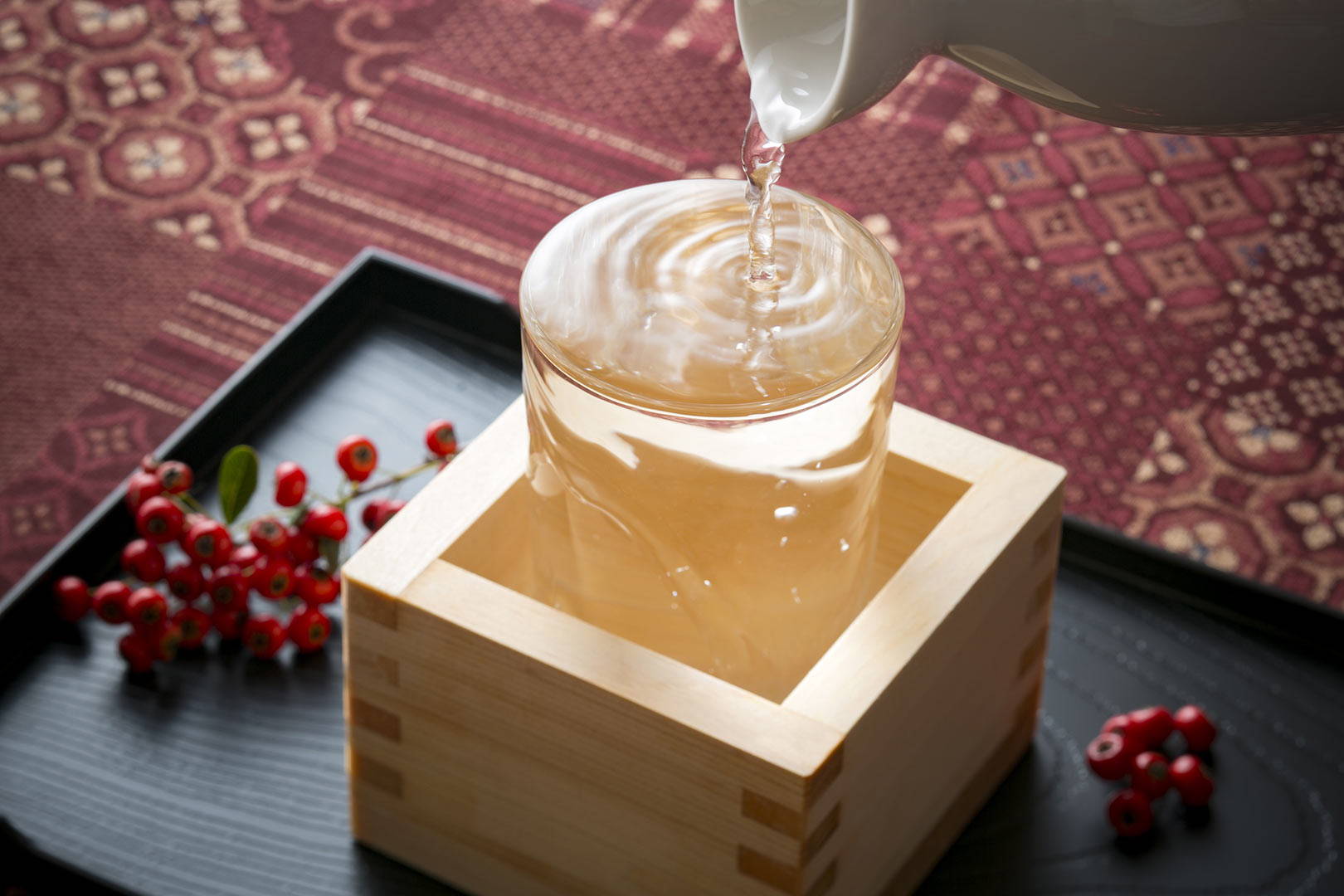
You might see this done in restaurants: a slim glass placed inside a masu cup, filled to the point of overflowing. This is called “mokkiri,” and it is how Japanese hosts demonstrate hospitality. The key point here is that the masu collects the spillage. In everyday life and when drinking from regular ochoko or glassware, avoid filling the glass to the brim unless you have a masu underneath. Fill your sake cup to a reasonable height so it can be lifted and sipped comfortably.
Don’t #2: Drink sake straight from the tokkuri/bottle
The thing that tokkuri and sake bottles have in common is that they are for sharing. Now more than ever, we are all quite aware of the possible dangers of sharing drinking vessels with others. So in addition to wanting to be polite, it’s also a safer bet to only drink from your own sake cup.
Don’t #3: Mix up, blend or “bomb” high-grade sake
Should you use sake in your cocktails? Purists will give you an unequivocal “no.” Using the premium artisanal sake you’ll find at Palate Project in a sake bomb would be akin to mixing a fine bottle of Bordeaux with a soft drink. If you want to enjoy your sake the way its makers intended, you’ll be best off having it on its own at the recommended temperatures mentioned above.
That said, as Japanese beverages collide more and more with Western drinking habits, more people are acknowledging the desire for creativity. There are respectful and artful ways to include sake in cocktails, but you have to know what you’re doing. Sake-only cocktails can be delicious, low-ABV drink options. If used in conjunction with liquor, you must make sure the ingredients bring out the best in each other; don’t let liquor overpower the sake.
Using flavored sake for sake cocktails is the best bet. Fruit-infused sake such as yuzu, plum and strawberry are already mixed, so have fun playing around! Palate Project even offers sake cocktail sets that include all the ingredients and recipe cards you need to make them at home.

Our Strawberry Matcha Latte Cocktail Set includes strawberry nigori, matcha sake, and coconut nigori.
“Genshu” (undiluted sake) is another good candidate for serving on the rocks or with a splash of soda water, as it tends to be bolder in flavor and alcohol content than other types of sake. We won’t tell anyone if you slip a slice of fruit in there — just be sure not to drown out the delicate flavors of the sake.
When crafting a sake cocktail with distilled alcohol, be sure to use similar ingredients in proper ratios to avoid masking or damaging the sake. For example, clear sake is best suited to clear liquors, such as gin. When done correctly, the botanicals in gin can marry with floral and fruity sake quite beautifully. In the end, though, the best way to drink sake is the pure way — on its own. High-grade, luxury sake, especially, should be treated with reverence.
Cheers!

The most important thing about serving and drinking sake is that you have fun and enjoy it. Drinking sake doesn’t need to be any more work than drinking wine or beer. A little information and etiquette should make it more fun and interesting, not more limiting. Play, discover and share with your friends. Kampai!
Sources:
http://wakabajirushi.fc2web.com/kikisake.html
https://www.masuza.co.jp/article/2779/
Author
Palate Project
Palate Project is the largest online sake seller in the U.S. We make it easier to access, understand and enjoy sake in everyday American life. It’s fresher sake with better guidance. Explore our Direct Imports collection for exclusive bottles handpicked by our experts in Japan.


